

OUR PROCESS
The Coming Home Project has developed an approach to plant medicine work that is tailored to the unique needs of the veterans, first responders, and Gold Star families we serve
Grounded in Community
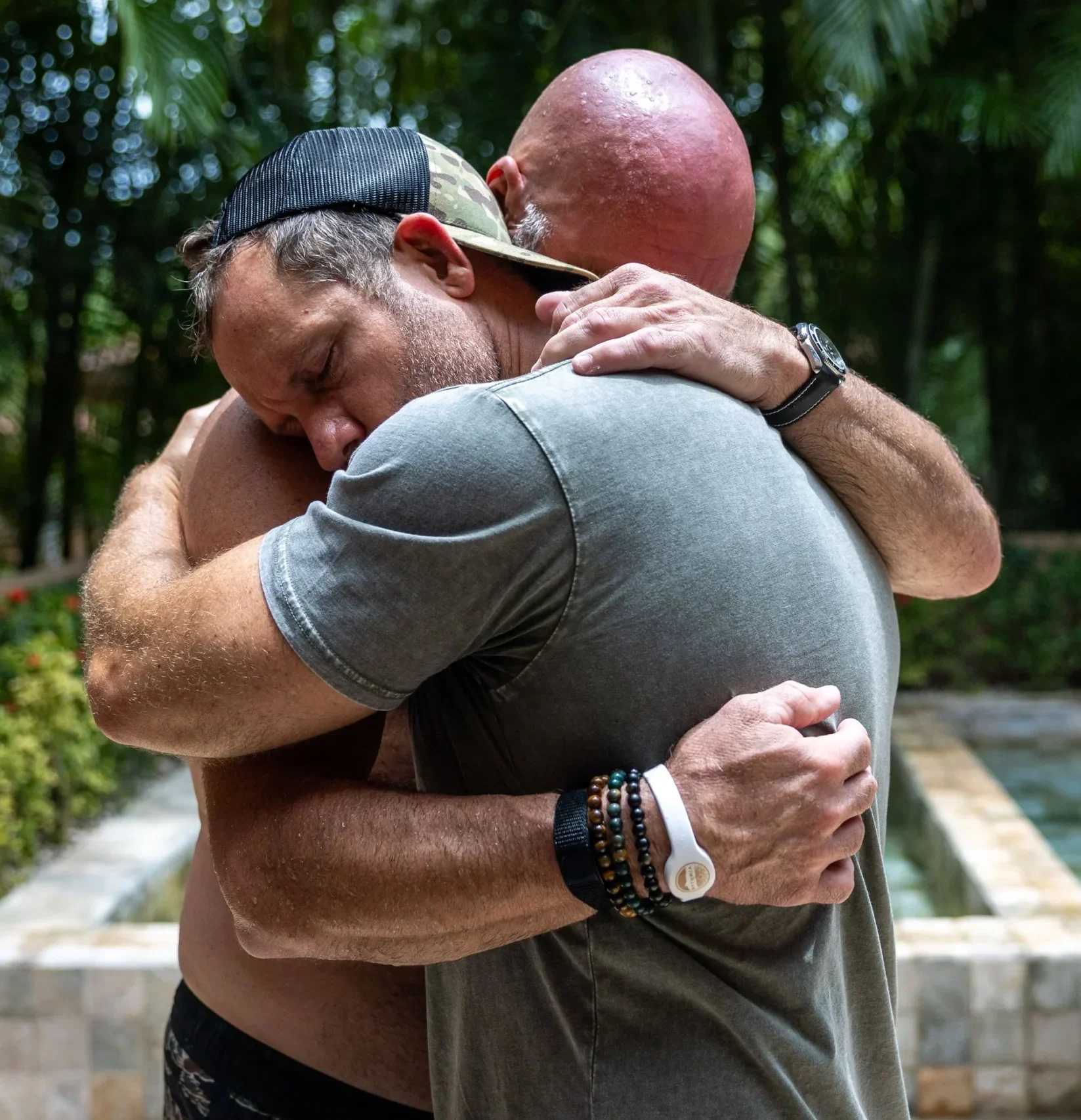
Community is a critical component of the healing process. Veterans and first responders attend each retreat together as a cohort.
Before the retreat, The Coming Home Project provides guidance and materials to support physical, mental, and spiritual preparation. Most groups include a number of returning participants who provide peer support and guidance.
During each retreat, we live in a communal setting and conduct integration together. During the weeks that follow, The Coming Home Project provides individual and group integration services to help graduates embed new habits.
The CHP Process
We conduct a structured intake, review, preparation, and post-retreat integration process with every participant. The goal is to ensure individuals clearly understand what to expect and how to prepare. We also want to ensure participants are ready for the plant medicine retreat and that the experience is right for them.
INTAKE
Candidates are typically referred to us by one of our partner organizations
SCREENING
Prospective participants are screened for medical history, substance use and military background. Our retreat partner completes a full medical screening.
GROUP PREPARATION CALL
Zoom discussion with all participants to discuss preparation and expectations
WELCOME PACKET
Participants receive a PDF guide with detailed information about the retreat experience
PREPARATION AND SUPPORT
Group preparation and support before the retreat
PLANT MEDICINE RETREAT
A retreat hosted by our partners, with ceremony, rest and group support
POST-RETREAT INTEGRATION
Two dedicated group integration calls per month, as well as tools for integration
The Retreat Experience
Retreats are the cornerstone of the healing path. Every retreat is different. Locations, groups, and schedules vary. The care around it stays the same: preparation before, community during, and integration after. Here is an overview of what participants can expect.
Before
- Screening and intake
- Group preparation call and welcome guide
- Group preparation and support
During
- Time to settle in and meet your group
- Preparation and integration sessions together
- Ceremony, with rest and reflection around it
After
- Group integration calls
- Tools of Integration
- Peer support from fellow veterans
Frequently Asked Questions
How do I know that I am ready for plant medicine treatment?
This is a question that only you can answer. Many veterans tell us plant medicines have helped them with PTSD, depression, anxiety, and addiction.
However, plant medicines are the very opposite of the current pharmacological paradigm prevalent in our medical system. We have grown used to taking pills to address acute symptoms without necessarily addressing the root causes of the ailment.
Plant medicines disrupt the brain’s default mode network (DMN). This is the system that controls our inner narrative and sense of self. The experience can be unsettling, especially when it involves “ego death.” This happens when the “I” that insists on control, that directs the internal narrative and construct of self, is disabled under the influence of plant medicines. While the experience is challenging, it often leads to deep insights and the resolution of past traumas by facilitating an emotional release that the ego has blocked.
Is it safe?
Plant medicines have been used for thousands of years in nearly every human culture as tools for healing and spiritual growth, and serious adverse reactions are rare in appropriately screened populations. However, there are some medicines and substances that can interact with these substances and cause adverse reactions. People with certain mental health conditions, such as psychotic conditions (schizophrenia, schizoaffective disorder), bipolar disorder, and borderline personality disorder, cannot safely use plant medicines. The screening process is designed to identify any potential medical issues, psychiatric history, or medicines that may cause potential problems. The CHP Welcome Guide that is sent to all participants several weeks prior to the retreat includes an extensive list of medications and supplements that should be avoided.
Ayahuasca, which is used in ceremony, can create very serious reactions when combined with medications that contain Monoamine Oxidase Inhibitors (MAOIs). The use of Selective Serotonin Reuptake Inhibitors (SSRIs) can also create the potential for dangerous side effects and should be avoided. Talk to your doctor before changing any medication.
Will I have a bad trip or lose my mind?
The “bad trip” notion is a hangover from some of the hysteria and overreaction to psychedelic medicines in the late 60s and early 70s. Unpleasant experiences can occur. However, anyone approaching plant medicine should understand several key factors.
The first is the critical element of “set and setting.” This refers to the mindset, mental state, and expectations participants bring to the experience, along with the physical environment and level of support that contain the experience.
These medicines are used in ceremony with reverence and intention. Participants prepare themselves mentally, physically, and spiritually. They enter the ceremony room with intention and an open heart. Our retreat partner holds the space during ceremony, creating a safe physical and psychic container in which each participant can completely let go and unravel during the journey.
Plant medicines will often show us difficult, sometimes even frightening things–painful memories, emotions, and experiences. However, this is a necessary part of the healing journey. Participants are reminded to simply sit with whatever comes up, however difficult. Many find that fear and discomfort give way to resolution and peace.
Where are you located?
The Coming Home Project is a U.S.-based 501(c)(3) organization, and our partners who provide the medicine are working outside the U.S. under licensure from foreign governments. Retreat information is provided to participants once they have completed the screening process and met the criteria to participate.
How do plant medicines help treat PTSD, anxiety, and depression?
The answer is complicated and too long to address fully here (see our Research page for more information). However, in short: the current science indicates that plant medicines temporarily disrupt the brain’s Default Mode Network (DMN). The DMN is thought to be the source of the ego, the interior “I” that controls the sense of self, that narrates the story to us.
Most of us who have battled PTSD and associated depression and anxiety are very familiar with the ego voice that spins out of control with constant negative chatter. The ego death experience that can come with a plant medicine journey helps move this voice out of the way so that we can deal with deeply repressed thoughts and feelings that have not been processed.
The scientific evidence indicates that plant medicines also create a window of neuroplasticity. This is why integration after the ceremony is critical. During the days and weeks in which the brain is in a plastic state, healthy integration activities can develop new neural pathways that move us away from trauma.
How do I sign up for one of your retreats?
Currently, The Coming Home Project works only with individuals referred by one of our partner organizations or through our outreach efforts in the veteran and first responder communities. As we continue to grow, our vision is to serve a broader range of veterans, first responders, and Gold Star families. Please feel free to contact us via the contact form on this site if you have any questions or want to support our mission. To get started, use the Connect with CHP page.